I made a treat for myself of Manchán Magan’s new book, pre-ordering it months ago without checking its publication date. Magan has become one of those dependable writers whose synopses don’t need consultation, as with seemingly banal topics like Thirty-Two Words for Field the author unravels fascinating and reliably peculiar meditations on the Irish language, history, and culture. As poetic as he is precise, Magan weaves between metaphysical and sociological analysis, often treating obscure topics with a rare level of patience and respect.
The author’s latest book Ireland in Iceland; Gaelic Remnants in a Nordic Land was, as it happens, published earlier this month. It is the second in a series on the interrelation of Irish and foreign cultures. The first entry, Brehons and Brahmins, provided a convincing argument for the interrelation of Irish and Indian cultures, often supported by reference to the work of leading academics. But Magan does not consider himself a scholar. He is simply interested and believes that you could be too.
Ireland in Iceland is a less persuasive text. Magan’s research uncovers fewer commonalities between cultures, but he acknowledges this deficit from the very beginning. The book opens with a reflection on the skeletal remains of a woman held in the National Museum of Iceland in Reykjavík. Evidence suggests this figure was Irish and brought to the storm-swept island as a child. Indeed, Magan cites historical research and DNA evidence that reveals an Irish presence in Iceland as far back 1200 years ago – placing these Celtic seafarers amongst the very first settlers of the land.
But it’s here that Magan runs into trouble. Despite their proven presence, these settlers appear to have left very little cultural impact. The author notes that most Icelanders know nothing of any Irish connection, with many laying the blame with the still tangible impact of Norwegian and Danish rule. A less skilled author might abandon ship here – but Magan isn’t after complete certainty. He’s uniquely comfortable with the precarious nature of ancient history and more than content just to. . . wonder.
What follows is a light comparison between both islands’ customs, with Magan noting the shared practice of recording history long before most other cultures, the existence of familiar mythologies, and even some linguistic similarities as potential evidence for cultural cross-contamination. The presence of werewolf stories in a country which never had forests, let alone wolves, is one particularly intriguing observation.
Unlike Brehons, however, Magan’s tone is less assured. He wonders at these connections, but finds little definitive proof. Still, one gets the impression that Magan doesn’t necessarily care if you’re convinced of a shared cultural past between Ireland and Iceland. Rather, he’s happy to argue that there very well might be.
This balance between scrutiny and speculation is what makes Magan such a valuable custodian of the ‘Irish story’. He is passionate about mythology, but cognisant of its potential abuse. Native myths have long been twisted and turned for political gain. In the early 20th century, the Irish Free State’s glorification of Cúchulainn-like patriots served to strengthen a national identity predicated on the Catholic, Irish-speaking male, excluding the very large proportion of citizens who didn’t remotely fit these demands. Meanwhile, the very existence of Irish women was undercut by constitutional and social oppression.
Whether it was the sidelining of female figures who previously played commanding roles in Irish mythology, or the sterile nature of Irish-language education, Magan has done excellent work undoing the mistakes of the Gaelic Revival. While the focus of his longer works has centred on revitalizing the relationship between language and the land, in this series Magan probes the connection between a nation and its central myths and legends.
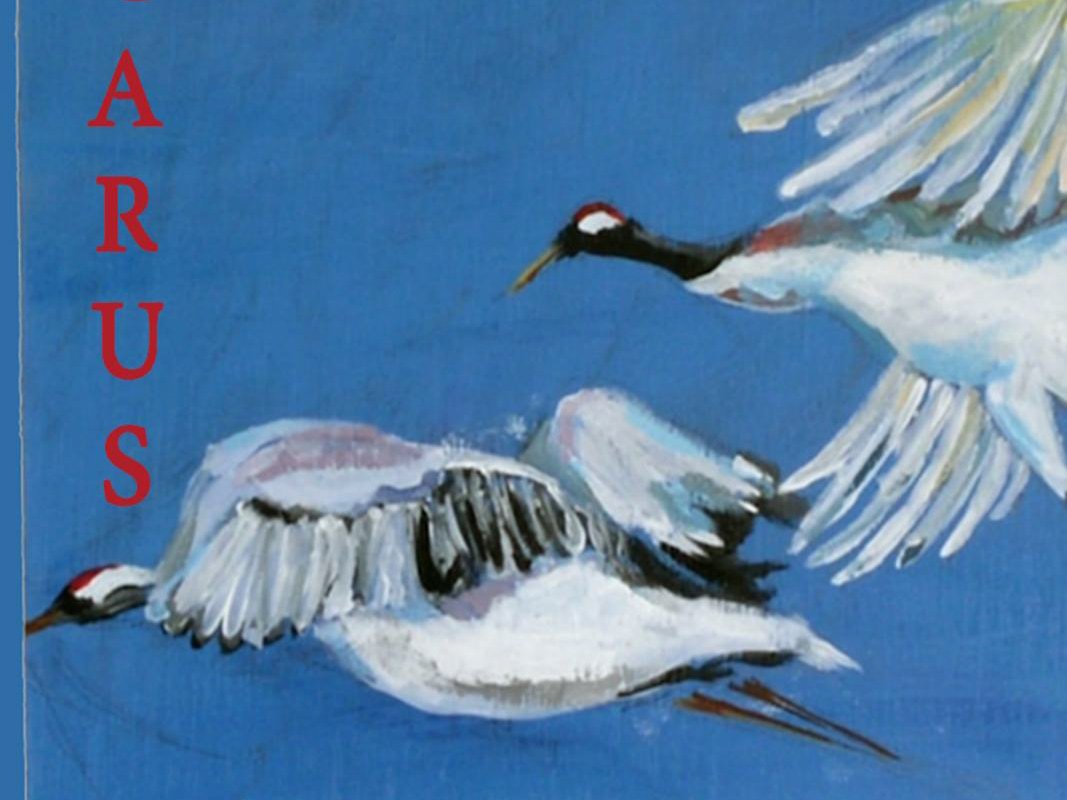
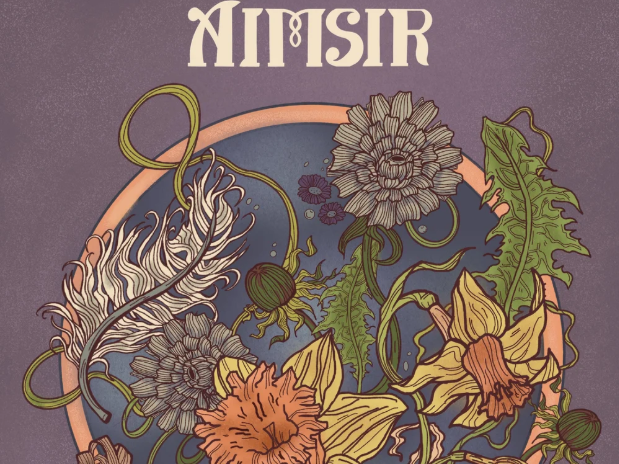
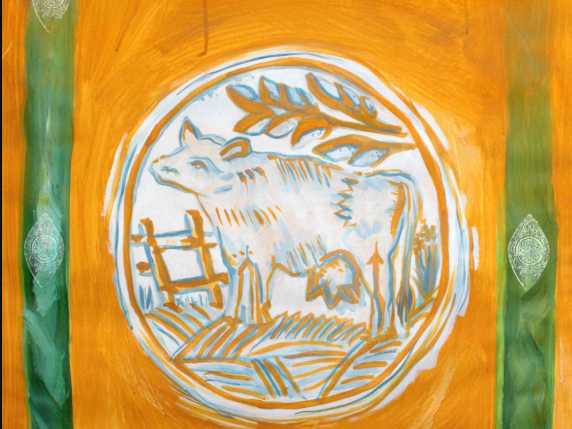
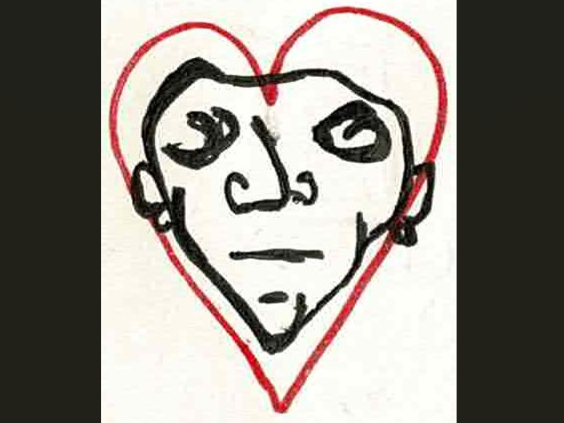
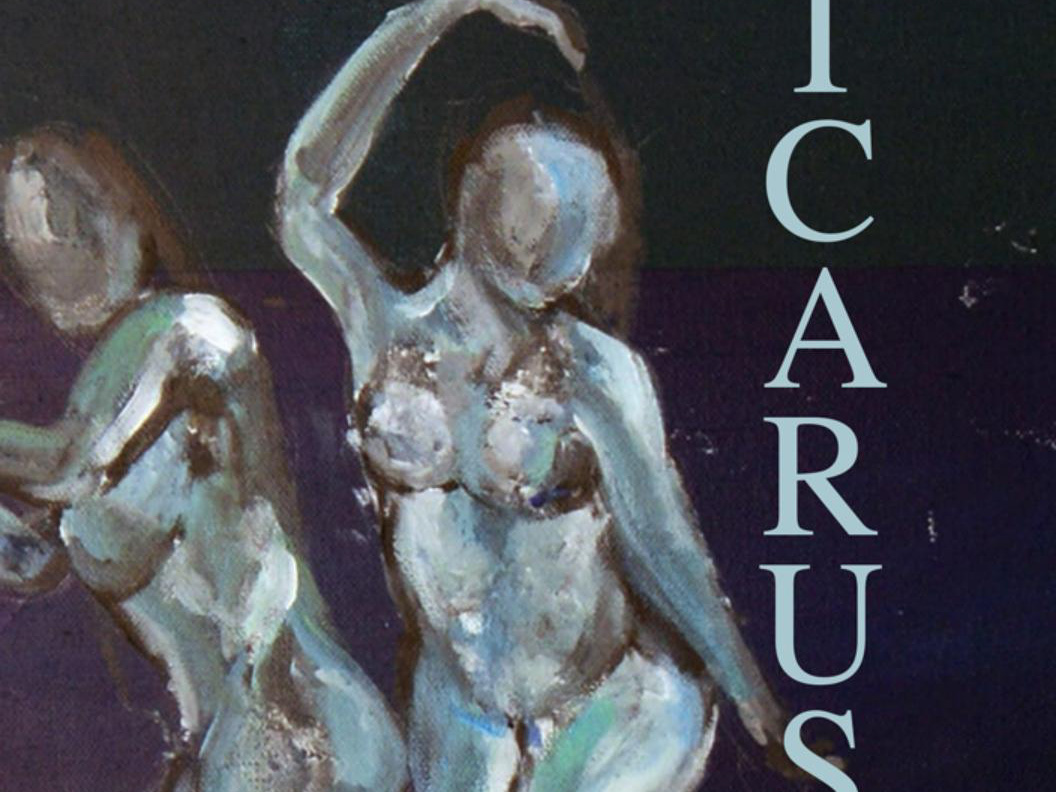
Magan’s argument that Ireland might well have had a place in Icelandic culture which has since deteriorated flies in the face of any notion of an inherent national identity. Nations change, stories change, identities never remain fixed, and no culture exists in a vacuum. This is beautifully illustrated by Aodh Ó Riagáin who represents this cultural fluidity through artwork which feels familiar but unique, Irish but Icelandic, ancient but alive.
The time-won knowledge behind over a dozen books is deftly presented here, never hampered by the arrogant tone of bad academic instruction. Magan’s work is cumulative, with no one work acting as authoritative - and indeed, this is a very slight volume. But it is the perfect vehicle for Magan’s enlightened postulations. The key to Magan’s thinking is offered on a back page:
There is nothing exceptional or unique about any particular culture. Each is an expression of ideas and practices that can be found among communities throughout the world. The notion of nationalism and national boundaries has obscured the fact that all of us descend from migrants and that we arise from a shared cultural development that has brought us from primates to Homo habilis, to Homo floresiensis and through to Homo sapiens.
This ethos demonstrates the value of such a devoted cultural pundit, who is willing to examine well-trodden concepts of nationhood at a time when nationalism is once again on the rise, and notions of heritage and culture are being weaponised once more.